Tuesday, December 23, 2014

Holiday Hours

We hope you all can enjoy a wonderful holiday season! We will have the following office hours for our sick patients during this upcoming week.
  • Wednesday December 24th-- phones turn on at 8:30 am and will have one doctor to see SICK patients for a few hours that day.
  • Thursday December 25th-CLOSED
  • Friday December 26th--Phones turn on at 8:00 and doctors will see SICK patients during that day. Regular Saturday and Sunday hours
Please have a safe holiday! We wish everyone a very Merry Christmas and a safe holiday season!


Thursday, December 4, 2014

How to Buy Safe Toys


Children can have a lot of fun playing with their toys. However, it’s important to keep in mind that safety should always come first. Each year thousands of children are injured by toys. So how can you be sure you are buying toys that are safe for your child? Read on to learn what to look for when buying toys and how a few simple ideas for safe use can often prevent injuries.

How to prevent injuries

Most injuries from toys are minor cuts, scrapes, and bruises. However, toys can cause serious injury or even death. This happens when toys are dangerous or used in the wrong way.

Tips for buying toys

Here are 10 tips to help you choose safe and appropriate toys for your child.
  1. Read the label. Warning labels give important information about how to use a toy and what ages the toy is safe for. Be sure to show your child how to use the toy the right way.
  2. Think LARGE. Make sure all toys and parts are larger than your child’s mouth to prevent choking.
  3. Avoid toys that shoot objects into the air. They can cause serious eye injuries or choking.
  4. Avoid toys that are loud to prevent damage to your child’s hearing.
  5. Look for stuffed toys that are well made. Make sure all the parts are on tight and seams and edges are secure. It should also be machine washable. Take off any loose ribbons or strings to avoid strangulation. Avoid toys that have small bean-like pellets or stuffing that can cause choking or suffocation if swallowed.
  6. Buy plastic toys that are sturdy. Toys made from thin plastic may break easily.
  7. Avoid toys with toxic materials that could cause poisoning. Make sure the label says “nontoxic.”
  8. Avoid hobby kits and chemistry sets for any child younger than 12 years. They can cause fires or explosions and may contain dangerous chemicals. Make sure your older child knows how to safely handle these kinds of toys.
  9. Electric toys should be “UL Approved.” Check the label to be sure.
  10. Be careful when buying crib toys. Strings or wires that hang in a crib should be kept short to avoid strangulation. Crib toys should be removed as soon as your child can push up on his hands and knees.

Gift ideas by age

Age recommendations on toys can be helpful because they offer guidelines on the following:
  • The safety of the toy (for example, if there any possible choking hazards)
  • The ability of a child to play with the toy
  • The ability of a child to understand how to use a toy
  • The needs and interests at various levels of a child’s development
  • Important information about recalled toys
One of the goals of the Consumer Product Safety Commission (CPSC) is to protect consumers and families from dangerous toys. It sets up rules and guidelines to ensure products are safe and issues recalls of products if a problem is found. Toys are recalled for various reasons including unsafe lead levels, choking or fire hazards, or other problems that make them dangerous. Toys that are recalled should be removed right away. If you think your child has been exposed to a toy containing lead, ask your child’s doctor about testing for elevated blood lead levels.
 
**Info from Healthychildren.org

Tuesday, November 11, 2014

Thank you to all Veterans!


We wanted to honor and thank all the Veterans that have served our country and who are currently serving! We are so grateful to you and your service. To our patients, friends and family we hope you can all honor and thank a Veteran today.
Thank you from
 the staff at
Willow Creek Pediatrics.

Tuesday, October 28, 2014

Halloween Safety Tips


Halloween is an exciting time of year for kids. Here are some tips from the American Academy of Pediatrics (AAP) to help ensure they have a safe holiday.

All Dressed Up:

  • Plan costumes that are bright and reflective. Make sure that shoes fit well and that costumes are short enough to prevent tripping, entanglement or contact with flame.
  • Consider adding reflective tape or striping to costumes and Trick-or-Treat bags for greater visibility.
  • Because masks can limit or block eyesight, consider non-toxic makeup and decorative hats as safer alternatives. Hats should fit properly to prevent them from sliding over eyes.
  • When shopping for costumes, wigs and accessories look for and purchase those with a label clearly indicating they are flame resistant.
  • If a sword, cane, or stick is a part of your child's costume, make sure it is not sharp or too long. A child may be easily hurt by these accessories if he stumbles or trips.
  • Obtain flashlights with fresh batteries for all children and their escorts.
  • Do not use decorative contact lenses without an eye examination and a prescription from an eye care professional. While the packaging on decorative lenses will often make claims such as “one size fits all,” or “no need to see an eye specialist,” obtaining decorative contact lenses without a prescription is both dangerous and illegal. This can cause pain, inflammation, and serious eye disorders and infections, which may lead to permanent vision loss.
  • Teach children how to call 9-1-1 (or their local emergency number) if they have an emergency or become lost.

Carving a Niche:

  • Small children should never carve pumpkins. Children can draw a face with markers. Then parents can do the cutting.
  • Consider using a flashlight or glow stick instead of a candle to light your pumpkin. If you do use a candle, a votive candle is safest.
  • Candlelit pumpkins should be placed on a sturdy table, away from curtains and other flammable objects, and should never be left unattended.

Home Safe Home:

  • To keep homes safe for visiting trick-or-treaters, parents should remove from the porch and front yard anything a child could trip over such as garden hoses, toys, bikes and lawn decorations.
  • Parents should check outdoor lights and replace burned-out bulbs.
  • Wet leaves should be swept from sidewalks and steps.
  • Restrain pets so they do not inadvertently jump on or bite a trick-or-treater.

On the Trick-or-Treat Trail:

  • A parent or responsible adult should always accompany young children on their neighborhood rounds.
  • If your older children are going alone, plan and review the route that is acceptable to you. Agree on a specific time when they should return home.
  • Only go to homes with a porch light on and never enter a home or car for a treat.
  • Because pedestrian injuries are the most common injuries to children on Halloween, remind trick-or-treaters:
    • Stay in a group and communicate where they will be going.
    • Remember reflective tape for costumes and trick-or-treat bags. 
    • Carry a cell phone for quick communication.
    • Remain on well-lit streets and always use the sidewalk.
    • If no sidewalk is available, walk at the far edge of the roadway facing traffic.
    • Never cut across yards or use alleys.
    • Only cross the street as a group in established crosswalks (as recognized by local custom). Never cross between parked cars or out driveways.
    • Don't assume the right of way. Motorists may have trouble seeing trick-or-treaters. Just because one car stops, doesn't mean others will!
  • Law enforcement authorities should be notified immediately of any suspicious or unlawful activity.

Healthy Halloween:

  • A good meal prior to parties and trick-or-treating will discourage youngsters from filling up on Halloween treats.
  • Consider purchasing non-food treats for those who visit your home, such as coloring books or pens and pencils.
  • Wait until children are home to sort and check treats. Though tampering is rare, a responsible adult should closely examine all treats and throw away any spoiled, unwrapped or suspicious items.
  • Try to ration treats for the days following Halloween.

Monday, October 20, 2014

Ebola--What you need to know

What is Ebola?
Ebola is a dangerous virus that can cause people to get very sick and even die. The virus is causing the biggest problems in western Africa, where it has spread quickly. People all over the world are concerned about Ebola and are taking steps to stop it and to treat those who are sick.

Ebola symptoms can start with fever and headache, kind of like the flu. But it can get worse and cause life-threatening symptoms, such as bleeding and trouble breathing.

It's very important that infected people get treatment right away. People who have Ebola also need to be cared for in a special way so that the disease doesn't spread to doctors, nurses, or other in their families and communities.

How do people catch Ebola?
Ebola does not spread like colds or the flu because it does not float through the air. Ebola also doesn't spread through food or water, like some other viruses.

Instead, Ebola spread when someone touches the body fluids(such as spit) of a sick person. That's why it's so important that hospital workers protect themselves by wearing surgical gloves and other protective equipment.

What is an Outbreak?
An outbreak is when many people are getting sick with the same illness around the same time. You may have heard of a flu outbreak, which is when lots of people get sick from the same types of flu virus. When an outbreak happens because of a virus, more people could get sick because there is a lot of that virus around.

Where did Ebola come from?
Scientist aren't sure how the first person gets Ebola at the start of an outbreak. But they think that people may pick up the virus by touching or eating infected animals. Tropical animals in Africa believed to carry the virus include great apes and other primates, fruit bats, porcupines and forest antelope.

Ebola gets its name from the Ebola River in the Democratic Republic of Congo (formerly Zaire). The disease was first reported in a village on the river in 1976. Since then, there have been a few outbreaks of the disease in western Africa, Uganda, and Sudan.

What do Kids need to do about Ebola?
Ebola is making many people sick in Africa, but no matter where you live, it's a good idea to keep up on a good routine of handwashing. If you keep your hands clean, you can help prevent more common illnesses such as colds and he flu.

**We will keep you updated if you need to know more information in the future
***Article by Kids Health/reviewed by Dr Rupal Gupta MD

Tuesday, October 14, 2014

Why you should Cook with your Kids

Even though we are short on time and sometimes it's easier to keep the kids out of the kitchen, having your child help you cook will provide some reasons why your child should be your little sous chef!

Here are some reasons from kidsarefrompluto.com and DDI Vantage Family Focus

Literacy--Cooking provides a natural way for children to learn new vocabulary and their meanings. As you are cooking, talk to your child about the ingredients, the cooking processes , and the changes occur. Read the recipe out loud to your child and go back to it as you cook. This teaches them two of the most important aspects of learning--obtaining information and executing instructions.

Food Knowledge--Cooking together is a fun opportunity to talk about the carious types of foods and their nutrition. Teach your child why eating fruits and vegetables are beneficial to your health.

Brain Development--Sensory experience are great fro brain development. It is amazing how cooking engages all of your child senses--sight, hearing, smell, touch, and of course, TASTE!

Motor Skills--Fine motor skills (fingers, hands and co-ordination) and gross motor skills (arm and body), develop through practive, practice and more practice! There are numerous cooking processes that give your child the chance to improve these skills: stirring, whisking, chopping, peeling, beating, kneading, tenderizing and much more!

Mathematical Concepts--Cooking with your child offers a hands- on way to become familiar with mathematical concepts, especially with theories relating to measurement, number and sequencing. Toddlers can learn to count the number of eggs used in making your favorite omelet and grade schoolers can get a mini lesson in fractions from how many teaspoons of salt to use in the chicken noodle soup.

Self-Esteem-- Your child will feel a great sense of accomplishment when seeing everyone eating and enjoying something they took part in making.

Family Tradition--Food plays an important role in every family's unique culture. Teach your children to follow the recipe

Developing Life Skills--Cooking is a very useful skill in life and involving your children in the kitchen at an early age is a big step towards developing their independence for the future.

It is fun! Need we say more? When kids have some input during meal preparation, they tend to ea better, especially if they are a picky eater.

**info from : kidsarefrompluto.com and DDI Vantage Family Focus

Thursday, September 25, 2014

What is Enterovirus D68?

Parents have been asking what is the Enterovirus D68--So here are a few questions and answers straight from the CDC that we hope will help.  Please call us if you have any questions.

 Q: What is enterovirus D68?

A: Enterovirus D68 (EV-D68) is one of many non-polio enteroviruses. This virus was first identified in California in 1962, but it has not been commonly reported in the United States.

Q: What are the symptoms of EV-D68 infection?

A: EV-D68 can cause mild to severe respiratory illness.
  • Mild symptoms may include fever, runny nose, sneezing, cough, and body and muscle aches.
  • Most of the children who got very ill with EV-D68 infection in Missouri and Illinois had difficulty breathing, and some had wheezing. Many of these children had asthma or a history of wheezing.                  

Q: How does the virus spread?

A: Since EV-D68 causes respiratory illness, the virus can be found in an infected person’s respiratory secretions, such as saliva, nasal mucus, or sputum. EV-D68 likely spreads from person to person when an infected person coughs, sneezes, or touches contaminated surfaces.

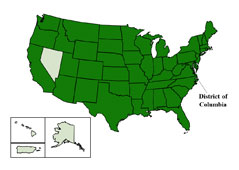
States with Lab-confirmed EV‑D68 Infections

States with Confirmed EV-D68 Infections From mid-August to September 24, 2014, a total of 220 people in 32 states have been confirmed to have respiratory illness caused by EV-D68. Learn more about states with confirmed cases.

Q: How common are EV-D68 infections in the United States?

A: EV-D68 infections are thought to occur less commonly than infections with other enteroviruses. However, CDC does not know how many infections and deaths from EV-D68 occur each year in the United States. Healthcare professionals are not required to report this information to health departments. Also, CDC does not have a surveillance system that specifically collects information on EV-D68 infections. Any data that CDC receives about EV-D68 infections or outbreaks are voluntarily provided by labs to CDC’s National Enterovirus Surveillance System (NESS). This system collects limited data, focusing on circulating types of enteroviruses and parechoviruses.

Q: What time of the year are people most likely to get infected?

A: In general, the spread of enteroviruses is often quite unpredictable, and different types of enteroviruses can be common in different years with no particular pattern. In the United States, people are more likely to get infected with enteroviruses in the summer and fall.
We’re currently in middle of the enterovirus season, and EV-D68 infections are likely to decline later in the fall.

Q: Who is at risk?

A: In general, infants, children, and teenagers are most likely to get infected with enteroviruses and become ill. That's because they do not yet have immunity (protection) from previous exposures to these viruses. We believe this is also true for EV-D68.
Among the EV-D68 cases in Missouri and Illinois, children with asthma seemed to have a higher risk for severe respiratory illness.
 

Q: How is it diagnosed?

A: EV-D68 can only be diagnosed by doing specific lab tests on specimens from a person’s nose and throat.
Many hospitals and some doctor’s offices can test ill patients to see if they have enterovirus infection. However, most cannot do specific testing to determine the type of enterovirus, like EV-D68. Some state health departments and CDC can do this sort of testing.
CDC recommends that clinicians only consider EV-D68 testing for patients with severe respiratory illness and when the cause is unclear.
Respiratory illnesses can be caused by many different viruses and have similar symptoms. Not all respiratory illnesses occurring now are due to EV-D68. Anyone with respiratory illness should contact their doctor if they are having difficulty breathing, or if their symptoms are getting worse.

Q: What are the treatments?

A: There is no specific treatment for people with respiratory illness caused by EV-D68.
For mild respiratory illness, you can help relieve symptoms by taking over-the-counter medications for pain and fever. Aspirin should not be given to children.
Some people with severe respiratory illness may need to be hospitalized.
There are no antiviral medications currently available for people who become infected with EV-D68.

Q: How can I protect myself?

A: You can help protect yourself from respiratory illnesses by following these steps:
  • Wash hands often with soap and water for 20 seconds, especially after changing diapers.
  • Avoid touching eyes, nose and mouth with unwashed hands.
  • Avoid kissing, hugging, and sharing cups or eating utensils with people who are sick.
  • Disinfect frequently touched surfaces, such as toys and doorknobs, especially if someone is sick.
Also, see an infographic that shows these prevention steps.
Since people with asthma are higher risk for respiratory illnesses, they should regularly take medicines and maintain control of their illness during this time. They should also take advantage of influenza vaccine since people with asthma have a difficult time with respiratory illnesses.

Q: What should people with asthma and children suffering from reactive airway disease do?

A: CDC recommends:
  • discuss and update your asthma action plan with your primary care provider.
  • take your prescribed asthma medications as directed, especially long term control medication(s).
  • be sure to keep your reliever medication with you.
  • if you develop new or worsening asthma symptoms, follow the steps of your asthma action plan. If your symptoms do not go away, call your doctor right away.
  • parents should make sure the child’s caregiver and/or teacher is aware of his/her condition, and that they know how to help if the child experiences any symptoms related to asthma.

Q: Is there a vaccine?

A: No. There are no vaccines for preventing EV-D68 infections.

**All Info from CDC.gov